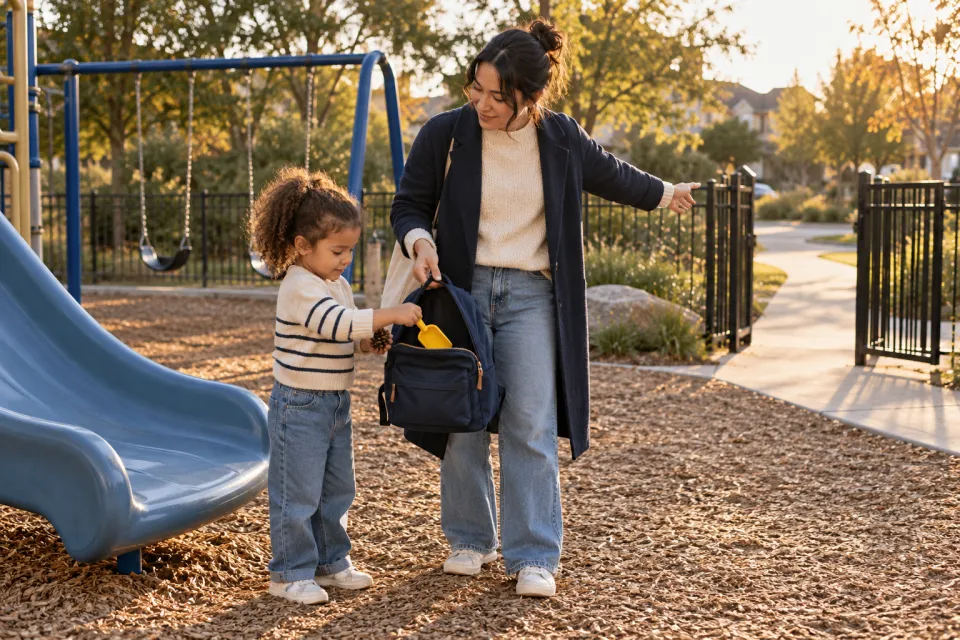
You might recognise the moment: you arrive at a playgroup, and your toddler stays beside you while other children head straight towards the toys. It is easy to feel the pressure to get them involved.
Begin with what you can see
Here is a fictional example. At a new group, a child stays close to their caregiver and watches the toy animals. Later, they accept an animal from the caregiver and begin playing nearby.
“Watched first, then played beside me” is a more specific observation than “Would not join in”. It also suggests questions for the next visit:
- Was this their first time in the room?
- What caught their attention?
- Did anything change when the activity became more familiar?
Your notes do not need to answer every question. They simply give you a starting point.
Make the invitation manageable
ZERO TO THREE describes how toddlers who take longer to warm up may benefit from watching with a trusted adult and approaching a new activity gradually. Their comfort can differ between familiar people and unfamiliar groups. Read its guidance for toddlers.
For the fictional playgroup above, a parent might say: “We can look together. I can see the animals over there.” Later, they could offer: “Would you like to hold this one beside me?” These are example words to adapt, not a script that every child will respond to.
The useful question afterward is what your child did next. If your invitation did not help, record that too.
Compare situations, not children
Instead of comparing your toddler with the child who joined immediately, compare two of your own child's experiences. A familiar visit and a new group may give you different observations.
Use a brief note: place, people, what I noticed, what changed. Keep it descriptive rather than giving the visit a pass or fail.
When you want more support
If your concern is ongoing, your child seems very distressed, or you are worried about communication or development, talk with their healthcare professional. An article or parent questionnaire cannot tell you the cause of a particular child's difficulty.
Four questions about joining in
Should I encourage my toddler to join in?
Offer a small invitation and stay available. Watching beside you or playing near one other child can be a starting point. For example, you might ask, “Shall we roll a car here together?” rather than asking your child to join the whole group. Let their response guide your next step. ZERO TO THREE describes gradual participation for ages 18–36 months.
What if they are chatty at home but quiet in groups?
Describe both settings. Comfort and participation can vary with people and surroundings; one setting does not cancel out another. A fictional pair of notes might read: “At home, brought me a toy bus and named its passengers. At the new group, watched the vehicles beside me without speaking.” Ask what happened later, rather than deciding which version is the “real” child.
What should I tell another caregiver?
Share an observation and an invitation to compare notes. For example: “At this morning's group, they watched the cars beside me, then rolled one towards me. What did you notice at your session?” Add what you tried and whether anything changed. Leave room for a different account. These are conversation prompts, not a checklist your toddler must complete.
When should I discuss my concern with a professional?
You can ask whenever you are concerned about your child's communication, development or distress. Do not use “slow to warm up” to explain away a concern. Bring specific examples from familiar and unfamiliar settings. The CDC advises discussing developmental concerns with your child's doctor. These observations and this guide cannot tell you whether there is an underlying condition.
Prepared with AI assistance. Examples and scripts are illustrative. This guide does not assess an individual child.
How we approach everyday observations